2024. 6. 12. 19:15ㆍ카테고리 없음
The Influence of Roman Residential Culture on Modern Housing
The Roman Empire introduced many innovations in architecture and social structure, significantly influencing modern society. Roman residential culture, in particular, has inspired contemporary housing. This post explores how Roman residential culture has impacted modern housing and provides specific examples.
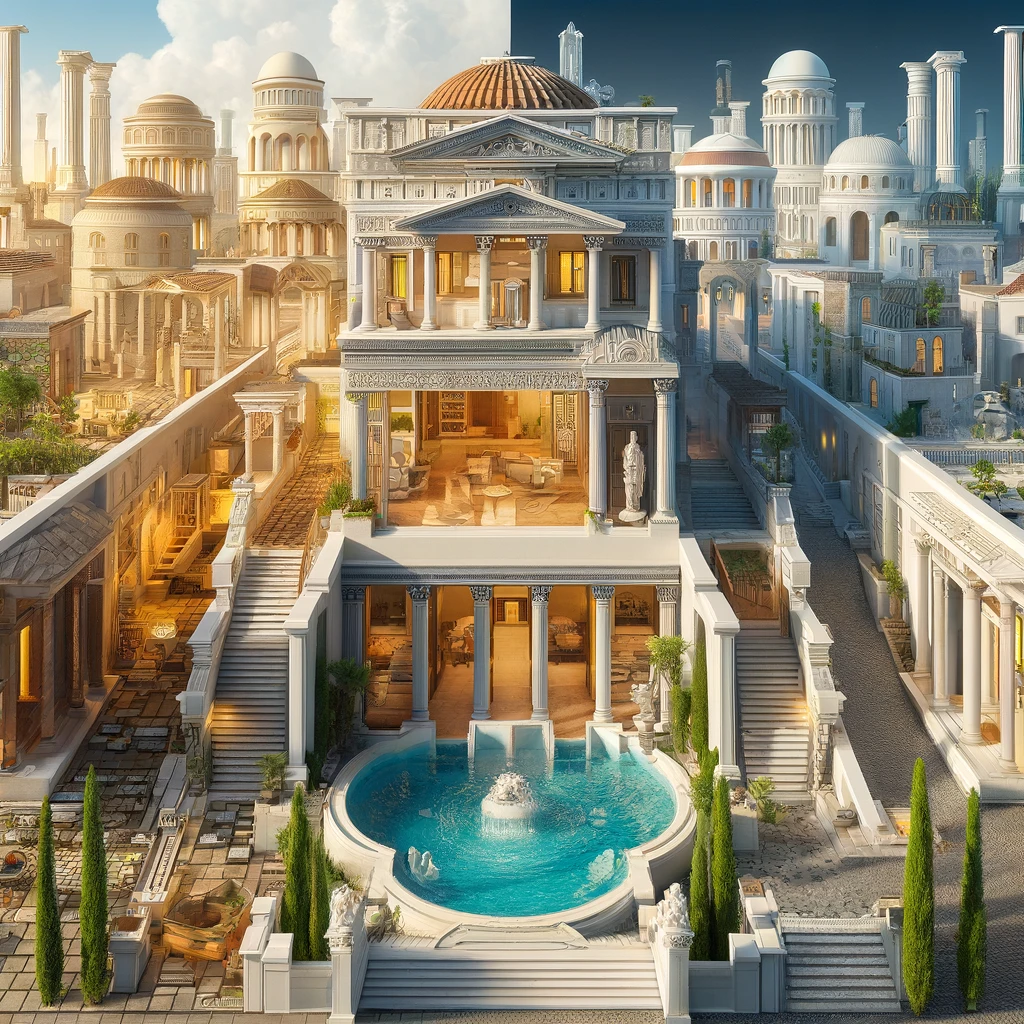
Key Elements of Roman Residential Culture
Roman housing varied based on social status and economic capability, with two main types of residences: insulae and domus.
- Insula (Insulae):
- Multi-story Apartments: Insulae were multi-story apartment buildings primarily housing Rome's urban working class. These buildings allowed for dense urban living as cities grew.
- Structure: Insulae typically had three to five stories, with shops on the ground floor and living spaces above.
- Materials: They were built using wood and brick, which posed risks of fire and structural collapse.
- Domus:
- Large Mansions: Domus were large houses for the wealthy, including aristocrats and prosperous merchants.
- Structure: A domus had several rooms, a central courtyard (atrium), and a garden (peristyle), featuring a complex and luxurious layout.
- Materials: High-quality marble, stone, and tiles were used, often adorned with elaborate frescoes on the walls.
Influence of Roman Residential Culture on Modern Housing
Roman residential culture has influenced modern housing in various ways:
- Apartment Structures: The concept of insulae laid the foundation for modern apartment buildings, highlighting the need for multi-story buildings to house large urban populations.
- Urban Planning: Roman urban planning significantly impacted modern city design, including road networks, building layouts, and public facilities.
- Shared Housing: The communal living concept of insulae is reflected in modern condominiums and apartment complexes with shared amenities.
- Luxury Housing: The elements of domus, such as gardens, atriums, and marble decorations, are echoed in modern luxury homes.
- Materials and Techniques: Roman building materials and techniques, such as the use of bricks and concrete and the hypocaust system (underfloor heating), have influenced modern construction practices.
Specific Examples
- Modern Apartments:
- Modern urban apartments are inspired by Roman insulae, featuring multi-story living spaces designed to house many residents in a single building.
- Communal Housing Complexes:
- The concept of communal housing complexes with shared spaces and amenities has roots in Roman insulae, reflected in contemporary condominium designs.
- Luxury Homes:
- Modern luxury homes often draw inspiration from Roman domus, incorporating gardens, marble decorations, and elaborate interiors.
- Urban Planning:
- Modern urban planning, including road networks, public facilities, and building layouts, has been significantly influenced by Roman city planning principles.
Conclusion
Roman residential culture has deeply influenced modern housing. The concepts of insulae and domus are reflected in today’s apartments, communal housing complexes, and luxury homes. Roman residential and urban planning principles have shaped the structure and lifestyle of modern cities. Understanding Roman residential culture helps us appreciate the origins and development of contemporary housing. The legacy of Roman residential culture remains evident in our daily lives.
Additional Questions
- What other types of Roman residences existed besides insulae and domus?
- How does Roman residential culture compare to that of other ancient civilizations?
- How are Roman urban planning principles applied in modern city design?
- How has Roman residential culture influenced modern eco-friendly housing design?
- What are some architectural examples that reinterpret Roman residential culture in contemporary design?
1. What other types of Roman residences existed besides insulae and domus?
In addition to insulae and domus, several other types of Roman residences existed:
- Villa:
- Rural Villa: Wealthy Romans owned villas in the countryside, used as retreats for leisure and relaxation.
- Urban Villa: Larger and more luxurious than domus, urban villas belonged to the elite and featured extensive gardens and opulent decorations.
- Taberna:
- These were combined shop and residential spaces, with the ground floor used for commercial purposes and the upper floors for living.
- Porticus:
- Located around public buildings or large houses, porticoes served as colonnaded walkways used for social interaction and commercial activities.
2. How does Roman residential culture compare to that of other ancient civilizations?
Roman:
- Insulae: Multi-story apartments allowed dense urban living.
- Domus: Wealthy residences with gardens and atriums, featuring luxurious designs.
- Villa: Both rural and urban, serving as retreats or grand city residences.
Egyptian:
- Mudbrick Houses: Common people lived in single-story mudbrick houses with small windows and flat roofs.
- Palaces: Pharaohs and nobles lived in lavish palaces with numerous rooms and gardens.
Greek:
- Oikos: Typical Greek homes were single or two-story buildings centered around a courtyard.
- Palaces: Minoan palaces, like Knossos, featured complex room layouts and frescoes.
Chinese:
- Siheyuan: Traditional Chinese homes with a central courtyard surrounded by rooms, suitable for extended family living.
- Palaces: Large, ornate palaces like the Forbidden City, with extensive decorations and vast spaces.
3. How are Roman urban planning principles applied in modern city design?
- Road Networks:
- Roman road networks influenced modern urban design with straight roads and grid layouts facilitating efficient traffic flow.
- Public Spaces:
- Roman forums inspired modern public squares and parks, designed for social interaction and leisure.
- Water Systems:
- Roman aqueducts and sewer systems laid the groundwork for modern urban water supply and sanitation infrastructure.
- Building Regulations:
- Roman building codes for fire safety and structural integrity have influenced contemporary urban building regulations.
4. How has Roman residential culture influenced modern eco-friendly housing design?
- Natural Lighting and Ventilation:
- Roman domus and villas emphasized natural lighting and ventilation through central courtyards, inspiring modern eco-friendly designs that maximize natural light and airflow.
- Water Management:
- Efficient Roman water systems have inspired modern sustainable water use practices, including rainwater harvesting and greywater recycling.
- Local Materials:
- Romans used locally sourced materials, a practice echoed in modern eco-friendly building strategies that prioritize local, sustainable materials.
- Energy Efficiency:
- The hypocaust system for underfloor heating has inspired contemporary energy-efficient heating systems.
5. What are some architectural examples that reinterpret Roman residential culture in contemporary design?
- The Roman House, London:
- This building reinterprets the Roman domus with a central atrium and open spaces for natural light and ventilation.
- Palazzo del Lavaggio, Rome:
- This modern building in Rome draws inspiration from Roman villas and domus, featuring luxurious materials and sophisticated design.
- Roman Apartments, New York:
- Inspired by insulae, this apartment building incorporates multi-story living with communal spaces.
- Green Villa, Berlin:
- This eco-friendly villa in Berlin applies Roman principles of natural light and ventilation, integrating sustainable design practices.