2024. 6. 13. 03:26ㆍ카테고리 없음
How Roman Military Tactics Influenced Modern Military Strategy
The Roman Empire conquered and ruled vast territories based on its formidable military strength. The tactics employed by the Roman army were among the most efficient and innovative of their time. These tactics have continued to influence modern military strategy up to this day. This article will explore how Roman military tactics have impacted modern military strategy and provide concrete examples.
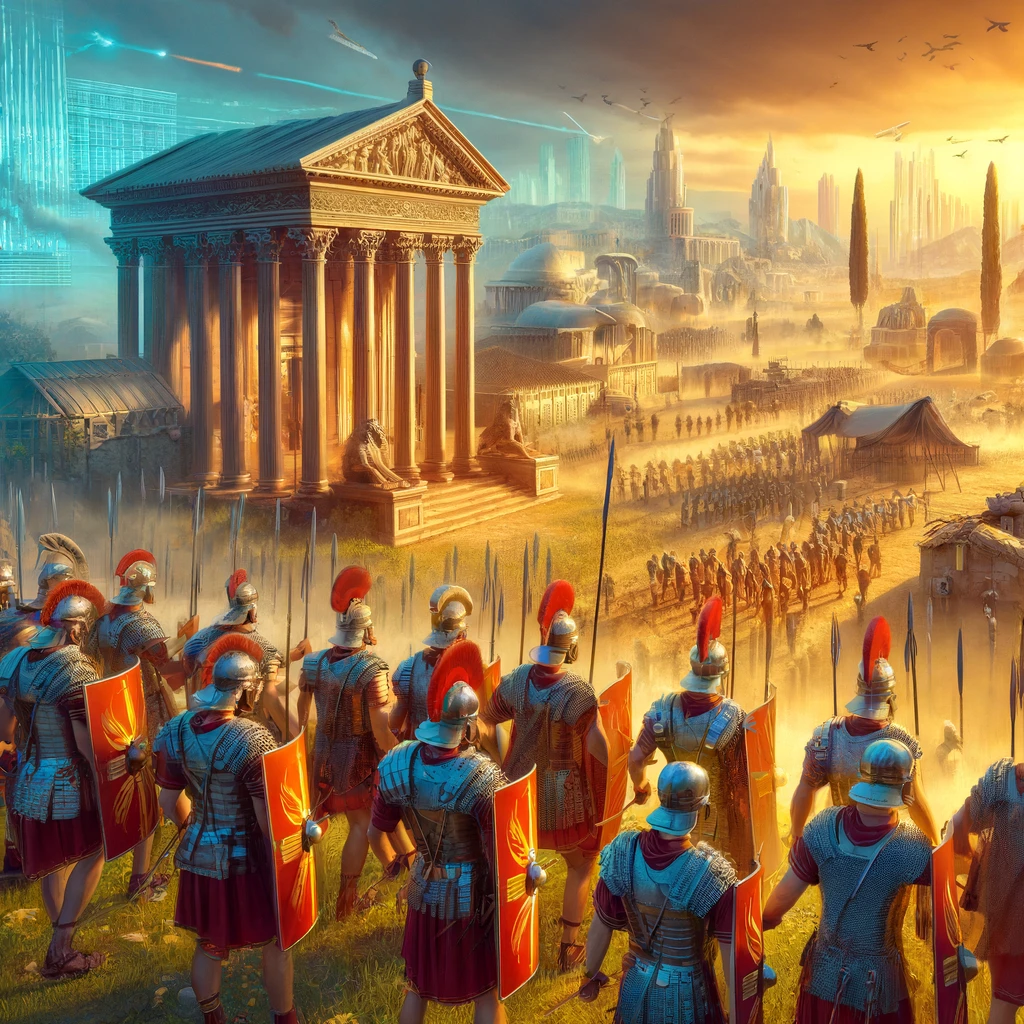
Key Tactics of the Roman Army
The Roman army effectively countered its enemies through a variety of tactics. The main tactics included:
- Formation Tactics:
- Testudo (Tortoise) Formation: The Roman army used the testudo formation to protect soldiers from all sides with shields. This formation was highly effective in defending against enemy arrows and javelins.
- Quincunx Formation: Soldiers were arranged in a pattern resembling the five dots on a die, effectively blocking and counterattacking enemy assaults.
- Flexible Tactics:
- The Roman army employed various tactics depending on the situation. They adjusted their combat strategies and quickly repositioned their troops according to the enemy's characteristics.
- Engineering Tactics:
- The Roman army used engineering units to build fortifications and construct roads and bridges. This ensured smooth troop movements and supplies, securing advantageous positions in battles.
- Siege Tactics:
- The Roman army used siege tactics to surround enemy fortifications, cut off supplies, and force surrenders. This method was effective in capturing enemy strongholds.
- Mobility Tactics:
- The Roman army demonstrated swift mobility through the cooperation of cavalry and infantry, enabling rapid encirclement and rear attacks on the enemy.
Influence on Modern Military Strategy
Roman military tactics have influenced modern military strategy in various ways:
- Formation Tactics:
- Modern armies also employ various formations in combat. Proper troop deployment is essential for effective defense and offense. For example, modern warfare uses coordinated efforts between mechanized units and infantry to defend against and counterattack enemy assaults.
- Flexible Tactics:
- Flexibility is crucial in modern military strategy. The ability to quickly adjust tactics and adapt combat strategies to the enemy's characteristics is necessary. This lesson is derived from the Roman army's flexible tactics.
- Engineering and Logistical Support:
- The engineering tactics of the Roman army are similar to modern military logistical support. Skills such as building roads, bridges, and fortifications are essential in modern military operations, facilitating smooth troop movements and supplies for successful missions.
- Siege and Blockade Tactics:
- Modern military strategy also employs siege and blockade tactics. Cutting off enemy supply lines and exerting economic pressure to force surrender are methods inspired by Roman siege tactics.
- Mobility and Coordination:
- Modern armies emphasize mobility and coordination. The collaboration between mechanized units and air support demonstrates rapid mobility and powerful firepower, concepts similar to the Roman army's mobility tactics.
Concrete Examples
- Shield Formation:
- The shield formations used by modern riot control units are inspired by the Roman testudo formation. Using shields to defend from all sides remains effective today.
- Engineering Units:
- Modern military engineering units have evolved from Roman engineering tactics. Building roads, bridges, and fortifications play significant roles in modern combat.
- Siege Tactics:
- Modern warfare employs siege tactics to surround and cut off supplies to enemy cities or bases, similar to Roman siege tactics. This isolates the enemy and forces surrender effectively.
- Mobility Tactics:
- Modern military mobility tactics draw heavily from Roman cavalry and infantry cooperation. Rapid movement and mobility are critical factors in determining victory in modern battles.
Conclusion
Roman military tactics have deeply influenced modern military strategy. The diverse tactics of the Roman army, such as formation tactics, flexible tactics, engineering tactics, siege tactics, and mobility tactics, continue to provide valuable lessons today. Understanding Roman military tactics helps to better understand the origins and development of modern military strategy. The military legacy of Rome can still be seen in our current military strategies.
Additional Questions
- What other tactics were used by the Roman army?
- How have Roman military tactics been specifically applied to modern warfare technology?
- How do Roman military tactics compare to those of other ancient civilizations?
- How can Roman military tactics be applied to modern non-military strategies?
- What are some examples of modern reinterpretations of Roman military tactics?
What Other Tactics Were Used by the Roman Army?
The Roman army employed various tactics to fight efficiently in battles. Some representative tactics include:
- Sertorius Tactics:
- Guerilla tactics: The Roman army used fast, mobile units to attack enemy supply lines and engage in small skirmishes. This tactic was especially effective in attacking the enemy's rear.
- Formations Tactics:
- The Roman army used various formations (Formations). For example, the Centuria formation consisted of 100 soldiers led by a centurion, and the Manipulus formation consisted of 200 soldiers. These formations were flexible and could be quickly reorganized.
- Ambush Tactics:
- Ambush tactics: The Roman army attacked from unexpected positions, causing significant damage to the enemy. This tactic was particularly effective in forests and gorges.
- Castra Tactics:
- The Roman army excelled in fortification. They built defensive walls and trenches in their camps to prepare for enemy attacks, similar to modern base defense tactics.
- Allied Tactics:
- Rome utilized various allied forces to enhance combat power. They integrated soldiers from allied nations into the Roman army, gaining advantageous positions in battles.
How Have Roman Military Tactics Been Specifically Applied to Modern Warfare Technology?
Roman military tactics have been applied to modern warfare technology in several ways:
- Testudo Formation:
- This shield formation has influenced modern riot control and military operations using shield-based tactics. It is especially useful in riot control and urban combat.
- Engineering Tactics:
- The Roman army's engineering tactics have become the foundation for modern military engineering units. Skills such as constructing roads, bridges, and fortifications, and demolition have evolved from Roman engineering techniques.
- Siege Tactics:
- Roman siege tactics have carried over into modern warfare, involving the siege and blockade of cities or bases, cutting off supply lines. For example, the Soviet siege of the German army at the Battle of Stalingrad in World War II is similar to Roman siege tactics.
- Mobility Tactics:
- Roman mobility tactics have greatly influenced modern mechanized units and air mobility tactics. Rapid movement and mobility to encircle and attack enemies are tactics used since the Roman era.
How Do Roman Military Tactics Compare to Those of Other Ancient Civilizations?
Roman Army:
- Organization: The Roman army had a thoroughly organized unit structure. Soldiers were systematically trained, and there was a clear hierarchy.
- Engineering Tactics: The Roman army used engineering units to construct roads, bridges, and fortifications, gaining advantageous positions in battles.
- Formation Tactics: Various formations were used to effectively defend against and counter enemy attacks.
Greek Army:
- Phalanx Formation: The Greek army used the phalanx formation, a dense shield and spear formation, to block enemies. It provided strong defense but lacked mobility.
- Naval Tactics: The Greeks excelled in naval warfare, using triremes to engage enemies at sea.
Egyptian Army:
- Chariot Tactics: The Egyptian army used chariots for fast attacks, providing mobility and shock power.
- Bows and Arrows: The Egyptian army excelled in long-range attacks using bows and arrows.
Chinese Army:
- Walls and Fortresses: The Chinese army maximized defense through walls and fortresses. The Great Wall is a prime example.
- Gunpowder Weapons: China invented gunpowder and used early gunpowder weapons, laying the foundation for modern military technology.
How Can Roman Military Tactics Be Applied to Modern Non-Military Strategies?
Roman military tactics can be effectively applied to non-military strategies:
- Flexible Tactics:
- In business management, the Roman army's flexible tactics can be applied to adjust strategies according to market conditions. Rapidly responding to changing market environments is crucial.
- Siege Tactics:
- Roman siege tactics can be used in business to surround and pressure competitors. Identifying and exploiting competitors' weaknesses to strengthen market position is an effective strategy.
- Mobility and Coordination:
- Teamwork and coordination to achieve goals quickly can draw inspiration from Roman mobility tactics. Emphasizing mobility and teamwork in project management is essential.
- Engineering Tactics:
- Roman engineering tactics can be applied to infrastructure and resource management. Efficient resource allocation and infrastructure development optimize organizational operations.
What Are Some Modern Reinterpretations of Roman Military Tactics?
- Modern Military Training:
- Many modern military training programs are based on Roman military training methods. Systematic training, hierarchy, and teamwork enhancement are examples.
- Shield Formation:
- Modern police riot control units use shield formations inspired by the Roman testudo formation. This is effective in riot and crowd control.
- Engineering Units:
- Modern military engineering units have evolved from Roman engineering tactics, using techniques such as constructing roads, bridges, fortifications, and demolitions. These play critical roles in modern combat and disaster response.
- Siege Tactics:
- The Soviet siege of the German army at Stalingrad during World War II is similar to Roman siege tactics, involving cutting off supply lines and isolating the enemy.