2024. 6. 10. 11:35ㆍ카테고리 없음
Interesting Facts About the Roman Empire
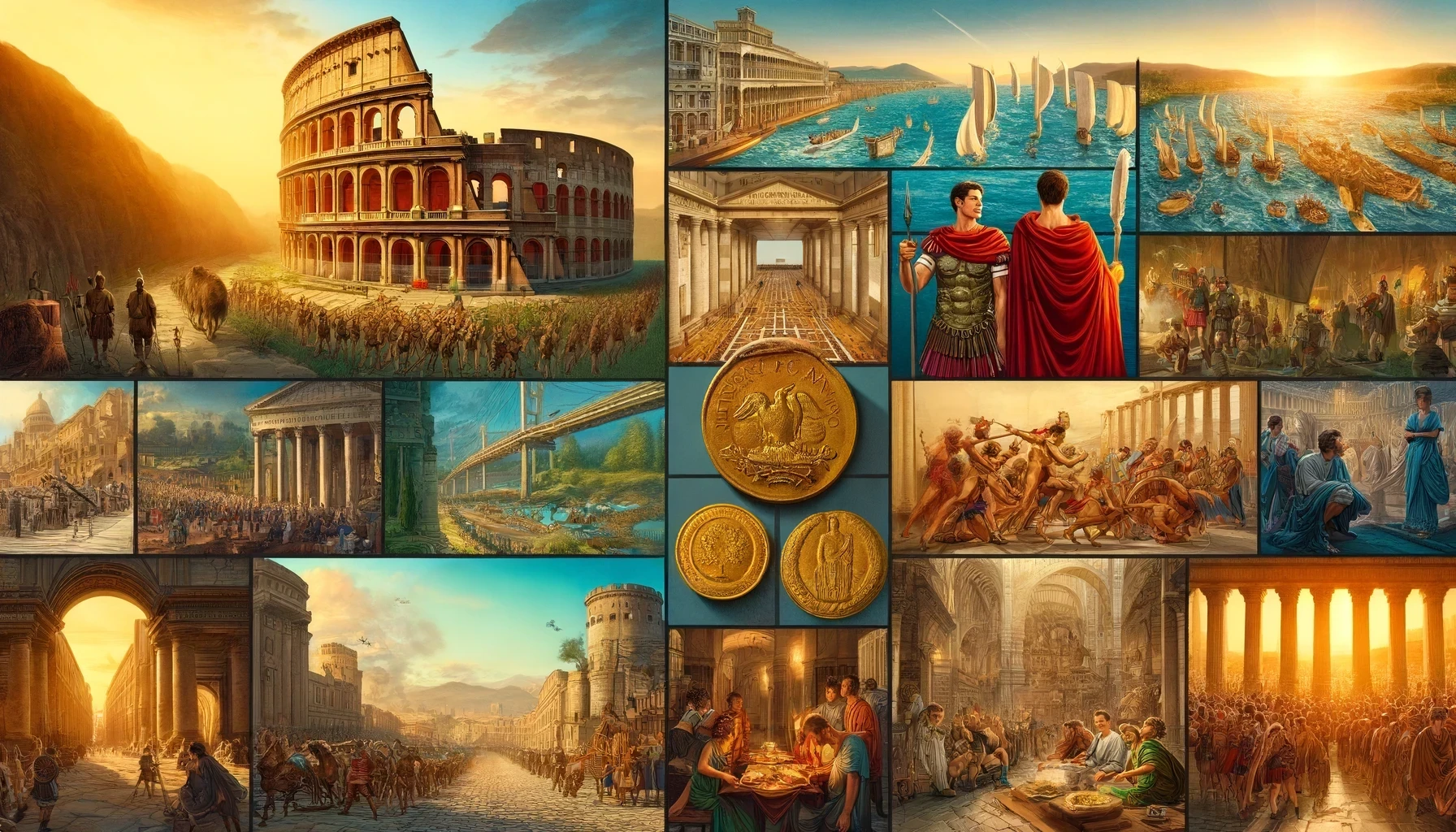
Secrets of the Colosseum: The Colosseum, a symbol of Rome, was completed in the 80s AD and could accommodate about 50,000 spectators. It hosted gladiatorial games and even recreated naval battles. Surprisingly, the Colosseum was initially filled with water to stage ship battles!
Roman Roads: Have you heard the saying, "All roads lead to Rome"? The Roman Empire built approximately 400,000 km of roads, with 80,500 km paved with stones. This infrastructure allowed for efficient governance and military movement.
Roman Numerals: Roman numerals are still in use today, and in ancient Rome, they were used to denote dates, times, and money. However, Roman numerals lacked the concept of zero, which limited their use in calculations.
Roman Cuisine: Romans enjoyed a variety of foods, particularly flour-based dishes. They loved garlic bread and desserts with cheese and herbs. Interestingly, Romans commonly diluted their wine with water.
Imperial Power: Roman emperors were almost considered divine. Starting with Emperor Augustus, the names of emperors were used for the names of months. For instance, July is named after Julius Caesar.
Roman Empire's Economic System
- Currency: The Roman Empire used gold, silver, and bronze coins. The Denarius was the most widely used silver coin.
- Trade: The Mediterranean was a hub for maritime trade. Rome imported grain from Egypt, spices from India, and silk from China.
- Agriculture: The empire's economy heavily relied on agriculture. Roman aristocrats managed large estates to maximize agricultural production.
- Taxation: Rome had an intricate tax system. Different regions had varied tax rates, and there were multiple forms of taxes, including land and goods taxes.
Roman Empire's Military Strategy
- Legions: The Roman army was divided into large units called legions, each comprising about 5,000 soldiers.
- Road Network: The Roman road network enabled rapid military movements and supply lines.
- Base Strategy: Rome established military bases at strategic locations to control regions effectively.
- Flexible Tactics: The Roman military adapted various tactics according to the situation, adjusting their combat strategies to match the enemy's strengths.
Daily Life and Culture in Rome
- Housing: Romans lived in multi-story apartments called Insulae, while the wealthy resided in large houses known as Domus.
- Entertainment: Romans enjoyed facilities like theaters, baths, and the Colosseum. Gladiatorial games were particularly popular.
- Food: Romans consumed a variety of foods, especially wine and bread. Delicacies included bird tongues and snails.
- Fashion: Romans wore Togas and Tunics, with fabric and color indicating social status.
Reasons for the Fall of the Roman Empire
- Political Instability: Frequent changes in emperors led to political chaos.
- Economic Struggles: High taxes, inflation, and reduced trade weakened the economy.
- Military Pressure: Continued invasions by Germanic tribes and other groups strained defenses.
- Internal Corruption: Bureaucratic corruption and excessive luxury were rampant.
- Climate Change: Reduced agricultural output led to food shortages.
Influence of the Roman Empire Today
- Law: Roman law laid the foundation for modern legal systems, particularly in civil and contract law.
- Architecture: Roman architectural techniques like arches, domes, and concrete use have inspired modern architecture.
- Language: Latin is the root of many European languages, including Italian, French, and Spanish.
- Politics: The Roman Republic and Empire influenced modern political systems, especially in parliamentary structure and legislative processes.
- Culture: Roman art, literature, and philosophy remain significant subjects of academic study.